
Imagine a worker on the 14th floor carrying broken blocks, wood pieces, and other construction waste down several flights of stairs. Now imagine doing that twenty times a day. It wastes valuable working hours, increases worker fatigue, and creates unnecessary safety risks.
This is why construction debris chutes are an essential part of efficient waste management on multi-storey construction projects. They provide a controlled way to move waste from upper floors directly to a collection point, helping construction teams maintain a cleaner and safer site.
What Is a Construction Debris Chute?
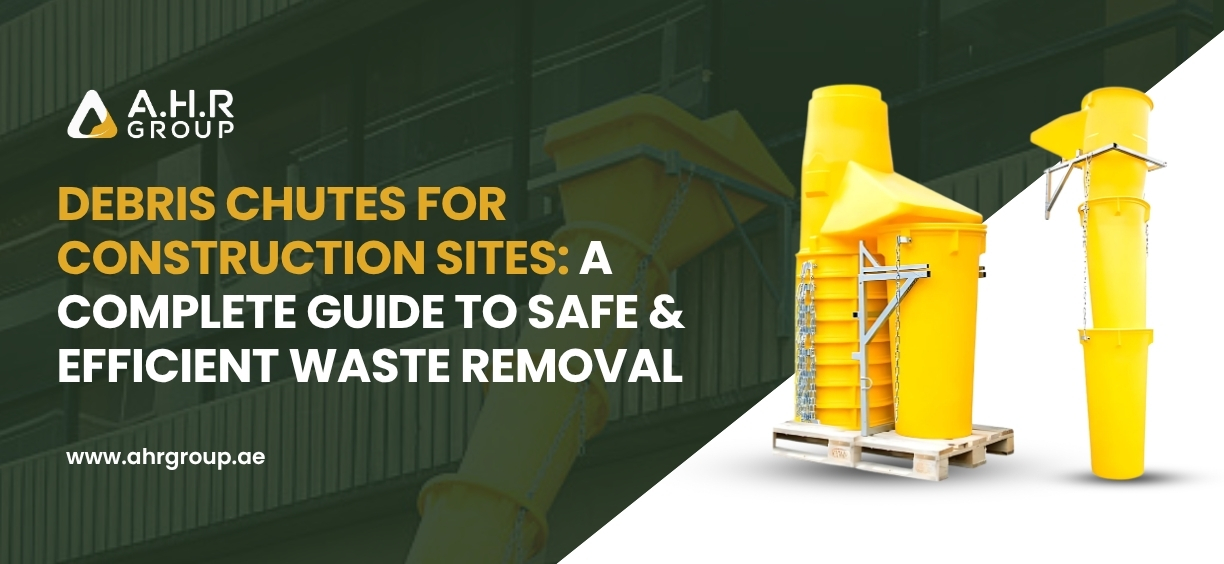
A construction debris chute is a vertical waste-disposal system made from connected chute sections. Workers can place suitable construction waste into the chute from different floors, allowing it to move down to a designated collection container at ground level.
For projects that need a complete waste-handling setup, combining a debris chute with the right waste skip bins for construction projects can make collection and storage at ground level much more efficient.
Types of Construction Debris Chutes
The right chute depends on the building height, type of debris, frequency of use, and project requirements.
- Plastic or PVC chutes: Lightweight and practical for many renovation and construction applications.
- Steel or heavy-duty chutes: Designed for demanding environments where durability is a priority.
- Modular chutes: Built from sections that can be assembled, extended, and removed as the project progresses.
AHR Group provides debris and rubbish chutes in Dubai in different configurations to suit construction-site requirements.
How Long Should a Debris Chute Be?
Chute length should be determined by the building height and floor-to-floor distance rather than using a standard size for every project.
Telescopic and modular sections provide greater flexibility because the system can be configured according to the required working height. Correct sizing also helps maintain efficient waste movement and reduces problems caused by poorly fitted sections.
Key Benefits of Construction Debris Chutes
A properly installed chute can improve both productivity and site organisation.
The main benefits include:
- Reduces manual handling and worker fatigue
- Speeds up construction waste removal
- Helps keep stairways and walkways clear
- Minimises scattered debris around the site
- Supports better housekeeping
- Makes waste collection more controlled
For high-rise projects, debris chutes can become an important part of a wider construction waste management strategy in Dubai.
Safety and Inspection Best Practices
Safety should always come first when using a debris chute. Loose connections, damaged sections, poor anchoring, or blockages can create serious hazards.
Before use, inspect the chute for loose joints, damaged sections, insecure anchor points, blockages, and excessive wear. The system should also be securely supported and installed according to the manufacturer’s requirements.
For a more detailed checklist, read our guide on debris chute installation and safety tips.
Regular inspections are particularly important on busy construction sites where the chute is exposed to continuous use.
Construction Waste Management in Dubai
A debris chute is only one part of an effective construction waste-management system. Waste should be collected, separated, stored, and handled appropriately throughout the project.
Using a chute to direct waste into a suitable skip can help create a more organised collection process. AHR Group’s construction waste management guide explains practical ways to improve waste handling on Dubai construction sites.
Choosing the Right Debris Chute Supplier
Choosing the right supplier is just as important as choosing the chute itself. Consider the building height, waste type, chute configuration, installation requirements, and expected usage before making a decision.
AHR Group offers waste management products for construction and commercial applications, including debris chutes and waste skip bins. Its debris chute systems are designed to support controlled waste disposal on construction sites.
If you are unsure which system fits your project, you can also review the AHR Group waste management FAQs for answers to common questions about chutes and waste skips.
Final Thoughts
A construction debris chute can make waste removal faster, safer, and more organised, particularly on multi-storey projects. However, the best results come from using the correct chute, installing it securely, inspecting it regularly, and pairing it with an appropriate waste collection system.
If you are planning a construction project in Dubai or the UAE, contact AHR Group for debris chute and waste-management solutions based on your project requirements.
Frequently Asked Questions
What is a construction debris chute?
It is a vertical system that allows construction waste to move from upper floors to a collection bin at ground level.
What type of debris chute is best for heavy waste?
Heavy-duty steel chutes are generally more suitable for demanding construction waste and high-volume applications.
How often should a debris chute be inspected?
The chute should be checked regularly, with inspections before use and additional checks whenever damage, blockages, or loose connections are suspected.
Can debris chutes be used on high-rise buildings?
Yes. Modular and telescopic systems can be configured for multi-storey and high-rise construction projects.
Does AHR Group supply debris chutes in Dubai?
Yes. AHR Group supplies debris chute solutions and provides support for projects based on their specific site requirements.