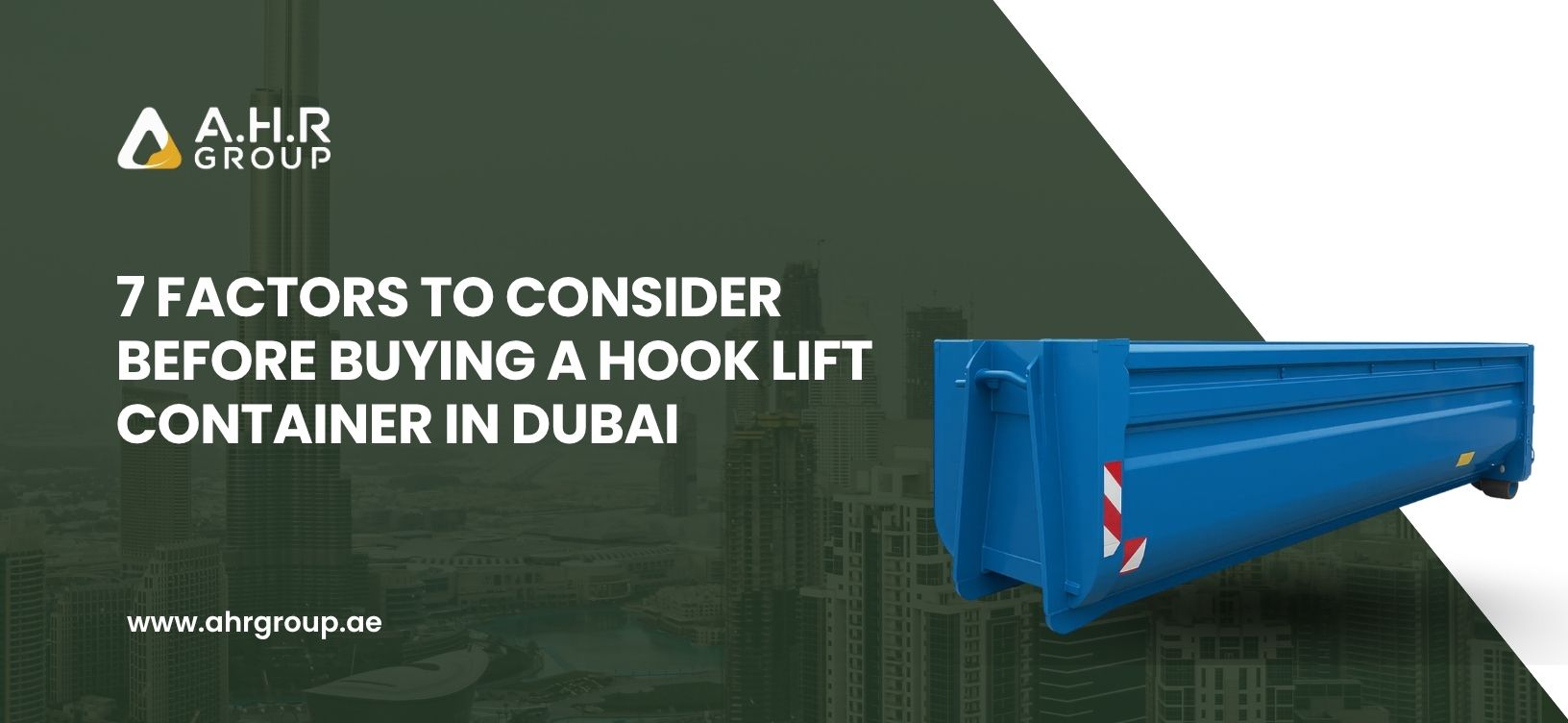
 Buying a hook lift container for your Dubai business involves more than choosing a capacity and comparing prices. Truck compatibility, steel quality, site access, and long-term operating costs all affect whether the container works for your operation.
This buying guide covers seven practical factors to check before placing an order.
The Container That Didn’t Fit the Truck
A Dubai construction company orders a new hook lift container, expecting its waste collection truck to pick it up immediately. However, when the truck arrives, its hydraulic hook system cannot engage the container correctly. The result? A delayed collection, wasted transport costs, and an avoidable equipment problem.
This situation highlights a simple rule: confirm your truck’s requirements before purchasing a container. The right specifications must match your waste volume, site conditions, and collection equipment.
1. Capacity Matched to Actual Waste Volume
Start by estimating how much waste your business generates daily or weekly. AHR Group offers 10m³ and 20m³ standard hook lift containers for different operational requirements.
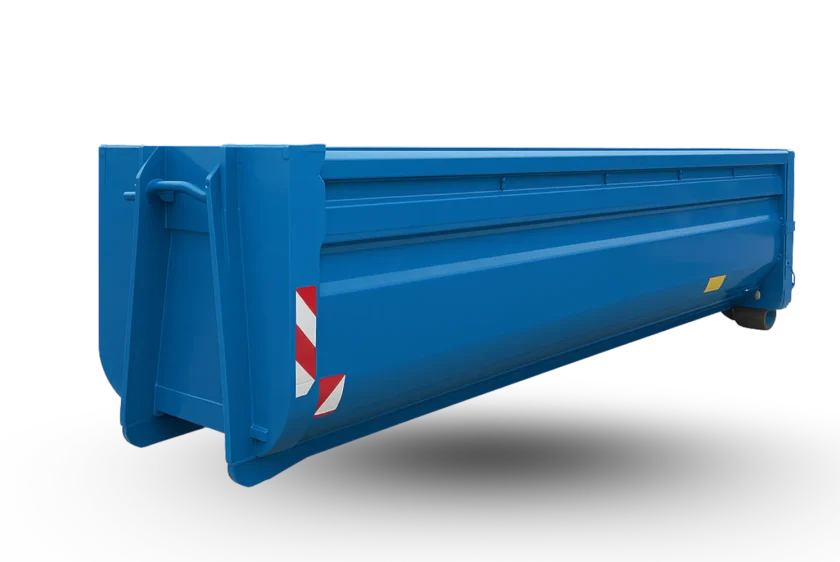
- 10m³ container: Consider this option when your site generates moderate waste volumes or has limited space.
- 20m³ container: Consider it for larger waste volumes where the site has sufficient storage and truck access.
An undersized container can overflow and require more frequent collections. An oversized container, meanwhile, can occupy valuable yard space and increase equipment costs.
For a Dubai construction project, assess the expected debris volume, collection schedule, and available space before selecting a capacity.
For a detailed comparison, read Standard Hook Lift Containers Explained: Types, Sizes, Capacities & Uses .
2. Truck and Hook System Compatibility
This is the most important technical check. A truck hook lift container must match the collection truck’s lifting system, including its hook dimensions, engagement points, and rated lifting capacity.
AHR’s specified 50mm hook and DIN 72230 Part 1 standard provide technical reference points. However, do not assume that every truck hook lifter supports every container built to a similar standard.
Before ordering, ask your collection provider to confirm:
- The truck’s required hook dimensions and container interface.
- The hydraulic lifting system’s rated capacity.
- Compatibility with the container’s design and loading requirements.
Get confirmation before delivery, not when the truck arrives at your site.
3. Steel Grade and Build Quality
A container’s steel specification affects its durability under regular loading and unloading. AHR’s standard hook lift containers use Domex 460/S460 MC steel, with specifications varying by model.
Check the steel grade, bottom plate thickness, weld quality, and reinforcement before comparing quotations. A container marketed as heavy-duty may not offer the same construction as another model.
For construction debris, confirm that the container’s specified design suits the material and expected loading conditions.
4. Site Space and Truck Access
A container may fit inside your yard but still create collection problems if the truck cannot approach or manoeuvre safely.
Dubai construction sites, industrial yards, and commercial zones can have restricted access, tight turning areas, and limited loading space.
Before choosing a 10m³ or 20m³ container, check the truck’s approach route, turning clearance, overhead obstructions, and space required for loading and unloading.
5. Application Type: Open-Top vs Enclosed
Match the container configuration to the waste you handle.
Open-top containers suit many general construction applications, including rubble, timber, and other suitable debris. Enclosed or secured configurations may suit operations that need protection from weather, unauthorised access, or material escaping during transport.
Confirm the available configuration and its suitability with your supplier before ordering.
6. Manufacturer Warranty and After-Sales Support
AHR Group offers a one-year warranty against manufacturing defects on its standard hook lift containers. Review the written warranty terms, exclusions, and process for reporting defects before purchasing.
Buying directly from a manufacturer can also help you clarify technical specifications and resolve product-related concerns. Ask who handles after-sales support and what documentation accompanies the container.
7. True Cost vs Long-Term Value
The lowest purchase price does not always mean the lowest operating cost.
Compare the initial container cost against expected collection frequency, transport charges, maintenance, and the cost of emergency pickups. A correctly sized container may help reduce unnecessary collections, provided your waste volume and collection arrangements support that result.
Consider the full working life of the equipment rather than choosing on price alone.
Pre-Purchase Checklist
Before placing your order, confirm each point:
- Container capacity matches actual waste volume.
- Collection truck and hook compatibility are verified.
- Steel grade and construction specifications are checked.
- Site access and truck turning clearance are confirmed.
- Container configuration suits the waste type.
- Warranty and after-sales terms are reviewed.
- Total cost is compared against collection requirements.
Final Thought
The right hook lift container starts with the right questions before purchase. Confirm your truck, site, capacity, and waste requirements first. Contact AHR Group to discuss your container requirements and available specifications in Dubai.
Frequently Asked Questions
1. What size hook lift container is right for a mid-size Dubai construction site?
A 10m³ container may suit moderate waste volumes, while a 20m³ option may suit larger projects. Assess waste generation, site space, and truck compatibility before choosing.
2. Will any collection truck work with any hook lift container?
No. The truck’s hydraulic hook system, lifting capacity, and container interface must match the container’s specifications.
3. What’s the real difference between 10m³ and 20m³ options?
The 20m³ model provides twice the nominal volume of the 10m³ model, but requires suitable site space and compatible collection equipment.
4. Does AHR Group help confirm truck compatibility before purchase?
Contact AHR Group with your collection truck’s specifications to discuss container requirements and compatibility before ordering.
5. What materials can be transported in a hook lift container?
Hook lift containers can handle suitable construction debris, rubble, timber, and general industrial waste, depending on the container’s specifications and load limits.