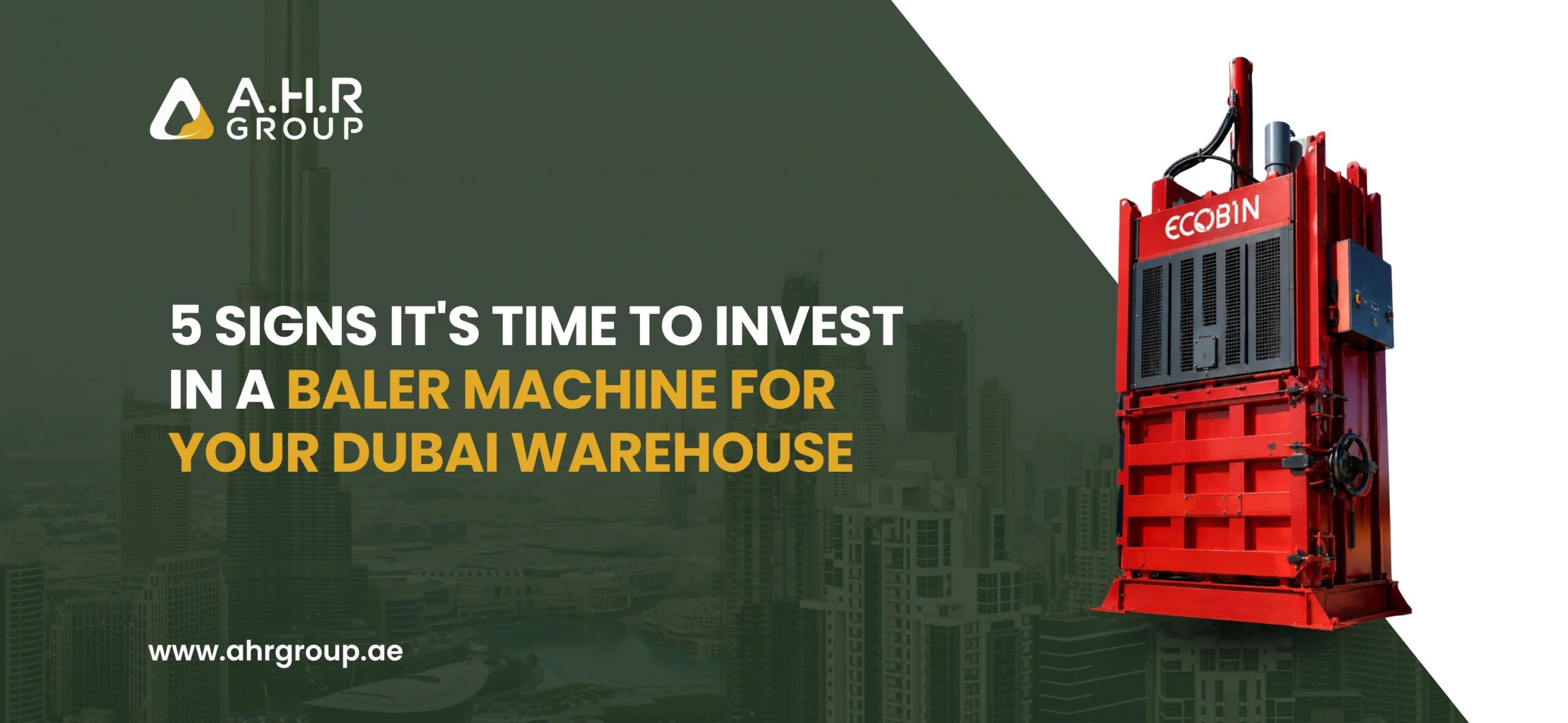
A baler machine can help Dubai warehouses reduce the space occupied by cardboard, plastic and other suitable recyclable materials. By compressing loose waste into dense bales, businesses can improve storage, simplify handling and potentially reduce collection requirements.
But how do you know when your warehouse actually needs one? If waste is taking up valuable space, staff are spending too much time handling it, or collections are becoming increasingly frequent, these five signs are worth considering.
1. Your Cardboard Pile Never Disappears
If your warehouse clears cardboard today only to face another pile tomorrow, your waste volume may have outgrown your current handling process.
Loose cartons contain a significant amount of unused space. A cardboard or carton baler compresses suitable cardboard into dense, stackable bales that are easier to store, move and transport.
Look for these warning signs:
- Cardboard is blocking walkways or storage areas.
- Waste containers fill up quickly.
- Employees repeatedly move loose cartons.
- Packaging waste builds up between collections.
Baling can turn scattered cardboard into a more organised and manageable waste stream.
2. You Handle Large Volumes of Recyclable Materials
Modern warehouses may generate more than cardboard. Plastic film, packaging materials, paper and other recyclable waste can also accumulate throughout daily operations.
The right waste baler can help compact suitable materials and make storage and collection more efficient. However, different materials may require different machine configurations, so they should not automatically be mixed together.
Before choosing a machine, consider the type and volume of waste your warehouse produces.
3. Staff Spend Too Much Time Handling Waste
Watch how much employee time is spent breaking down boxes, moving loose packaging and reorganising waste areas.
If these repetitive tasks happen every day, your warehouse may be relying too heavily on manual waste handling.
A baler can reduce some of this manual effort, allowing employees to spend more time on core activities such as receiving goods, picking orders and loading vehicles.
The goal is not simply to automate waste handling. It is to make better use of valuable warehouse labour.
4. You Could Recover More Value From Recyclables
Recyclable waste does not always have to be treated purely as a disposal cost.
Properly separated and compressed materials can be easier to store and transport to recycling partners. Depending on material quality, quantity and market conditions, cardboard, aluminium and other suitable recyclables may have recoverable commercial value.
A recycling baler can help create consistent, manageable bales, but revenue should never be assumed. The actual value depends on local recycling arrangements and current market conditions.
5. Waste Is Taking Up Valuable Floor Space
Warehouse space comes at a premium. Loose cardboard and packaging can quickly occupy areas that could otherwise be used for inventory, equipment or movement.
A vertical baler can be suitable for businesses with limited floor space and moderate waste volumes. Horizontal systems may be more appropriate for higher-volume operations.
The correct choice depends on your waste material, daily volume, available space and required bale size.
Quick Self-Check
Ask yourself:
✅ Overflowing cardboard between collections
✅ Multiple waste streams handled separately
✅ Staff time lost to manual box-breaking
✅ No revenue recovered from recyclables
✅ Floor space shrinking as volume grows
If several answers are yes, it may be time to evaluate whether a baler machine could improve your waste-handling process.
Which Baler Fits Your Warehouse?
| Warehouse Situation | Best Fit |
| Limited floor space, moderate volume | Vertical baler |
| High-volume, multiple material types | Horizontal/heavy-duty baler |
| Mostly cardboard and packaging | Carton baler |
| Mixed plastics and film | Plastic baling machine |
| General mixed waste | General waste balers |
AHR Group provides baler solutions designed for different waste-handling requirements. Explore the available baler machine solutions or contact AHR Group to discuss your requirements.
.
FAQs
1. When should a Dubai warehouse invest in a baler machine?
A warehouse should consider a baler machine when waste regularly overflows, staff lose time handling it, or storage space becomes limited.
2. Which baler is best for cardboard waste?
A carton baler is a practical choice for warehouses that generate large amounts of cardboard and packaging waste.
3. Is a vertical baler suitable for small warehouses?
Yes, a vertical baler is well suited to warehouses with limited floor space and moderate waste volumes.
4. Can a baler machine handle plastic waste?
Yes, suitable plastic balers or a plastic baling machine can compact compatible plastic film and other recyclable materials.
5. Can baling recyclable waste help reduce disposal costs?
Yes, compacting recyclable materials can improve storage and handling efficiency and may create opportunities for recycling value.