The Warehouse Problem Nobody Budgets For
A Dubai warehouse manager showed me a loading bay buried under cartons. The team paid for extra skip collections weekly, yet the cardboard kept returning faster than the contractor could remove it. Someone suggested a baler machine. Within days, the site began compacting waste before it left the building, cutting clutter, reducing collections, and giving the team back floor space. That change turned a headache into a controlled process.
What a Vertical Baling Machine Actually Does
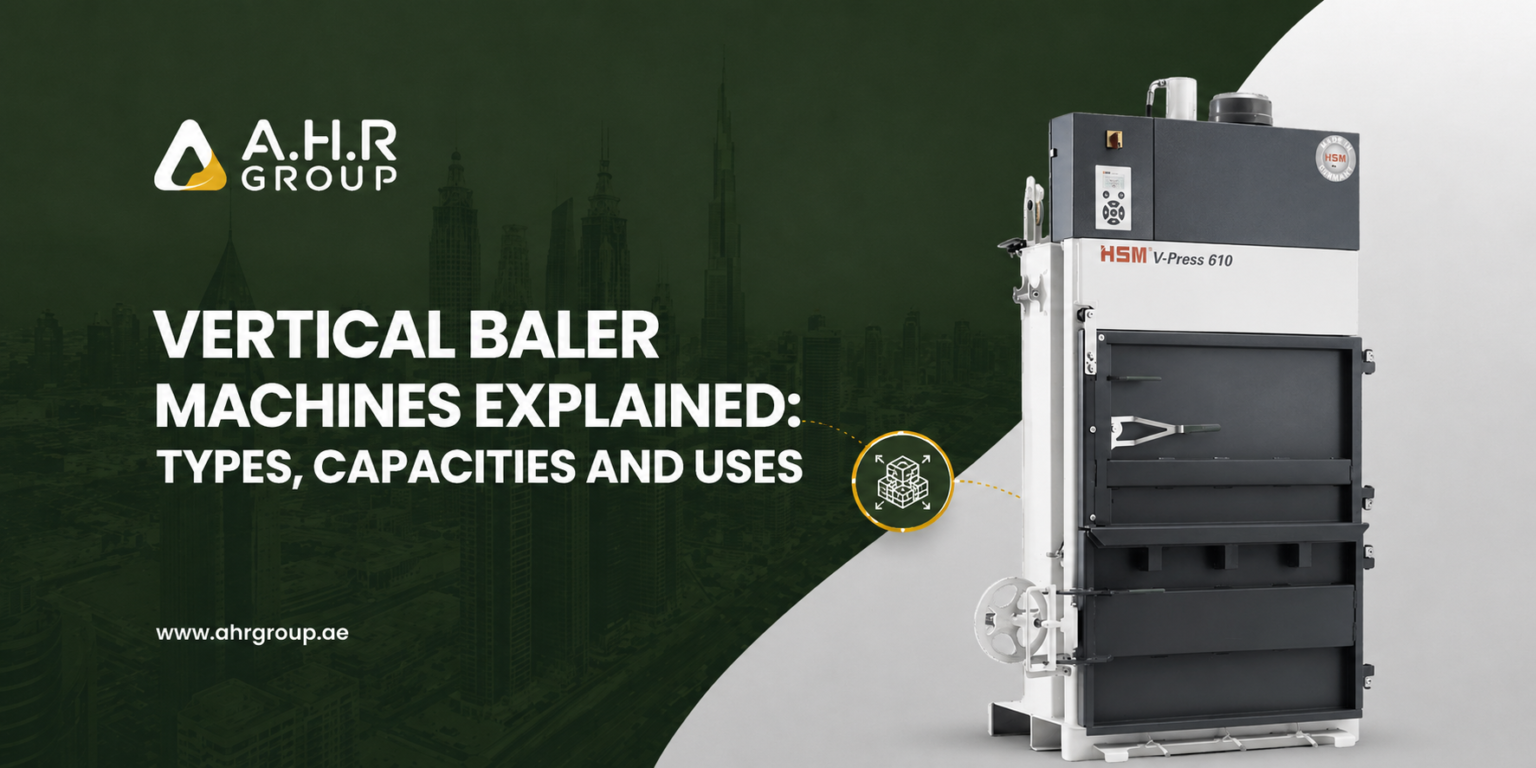
A vertical baler uses hydraulic pressure to compress loose cardboard, paper, plastic film, or material inside a chamber. The operator loads the waste, closes the door, starts the cycle, and the ram presses everything downward into a dense block.
A waste baling press then holds the material while the operator straps the bale for storage or collection. In practical terms, a baling press machine transforms bulky waste into a compact, stackable unit. What once filled a skip can often fit into a fraction of the space.
The benefit is control. You reduce overflow, improve housekeeping, and create a cleaner waste area without increasing labour.
Types of Baling Machines — Matched to What You’re Compacting
The right choice depends on what your facility throws away most.
- A cardboard baler machine suits supermarkets, warehouses, offices, and retail stores that generate large volumes of cartons. It handles corrugated board efficiently and helps keep loading bays clear.
- A plastic baling machine is better suited to shrink wrap, packaging film, PET bottles, and production offcuts. Manufacturing plants and hospitality sites often use these units because loose plastic occupies a large amount of space.
- A recycling baling machine can support more than one recyclable stream, depending on its 4 design and operating setup. These baling machines are useful for mixed commercial sites, but materials should still be separated before compacting.
- Choosing the wrong machine is a common mistake. A cardboard-focused unit may struggle with dense plastic, while a plastic-rated machine may be unnecessary for light box waste.
Capacity — Bigger Isn’t Always Better
Small waste balers suit shops, offices, and compact stockrooms with moderate daily volumes. Larger models serve logistics centres, factories, and recycling operations where waste arrives continuously.
A heavy-duty waste baler may offer more pressing force, but right-sizing matters more than raw power. An oversized baling machine sitting half-empty wastes money and floor space. Meanwhile, an undersized unit creates delays because staff must run too many cycles.
In practice, match capacity to daily volume, bale weight, loading opening, available power, and collection frequency.
Buy or Rent? The Question Every Dubai Business Asks
Baler rental makes sense for short-term projects, seasonal peaks, or businesses testing whether compaction suits their operation. It protects cash flow and gives managers time to measure real savings.
Buying works better when waste volumes stay consistent. Over time, reduced skip collections, lower handling costs, and better space use can justify the investment.
That said, compare service support, maintenance, operator training, and consumable costs before deciding.
Make Waste Compaction Part of a Better Facility Plan
A baler works best as part of a wider waste strategy that includes correct bins, staff training, safe storage, and regular cleaning. AHR Group supports commercial and industrial sites across Dubai, the UAE, and the wider region with practical waste-handling solutions. Its broader service range can also support related needs, including garbage chute cleaning Dubai requirements.
For the right baler machine, start with your material type, daily volume, floor space, and collection schedule. Contact AHR Group for a tailored recommendation that fits your operation, budget, and long-term waste goals.
Frequency Answer Question
1. What is a vertical baler machine?
A vertical baler machine uses hydraulic pressure to compress loose materials such as cardboard, paper and plastic into dense, strapped bales. It helps businesses reduce waste volume, save storage space and simplify recycling collection.
2. Which materials can be processed in a vertical baler?
Depending on the model, vertical baling machines can process cardboard, paper, plastic film, PET bottles, aluminium cans and textiles. Always confirm material compatibility with the supplier before using the machine.
3. How do I choose the right baler capacity?
Consider your daily waste volume, material type, available floor space, electrical supply and preferred bale weight. Small waste balers suit offices and retail stores, while heavy-duty models are better for warehouses, factories and recycling centres.
4. Is buying a baler better than baler rental?
Buying is generally more cost-effective for businesses producing consistent waste volumes over the long term. Baler rental may be better for seasonal operations, temporary projects or companies that want to test the equipment before investing.
5. How can a baler machine reduce business waste costs?
A baler machine reduces the space occupied by loose waste, which can lower collection frequency and improve storage efficiency. It can also make clean recyclable materials easier to handle and potentially more valuable to recycling contractors.